
A blog about food in Thailand
and elsewhere.


Northern Exposure

Posted at 1am on 5/20/13 | read on
No comment;


Northern Exposure

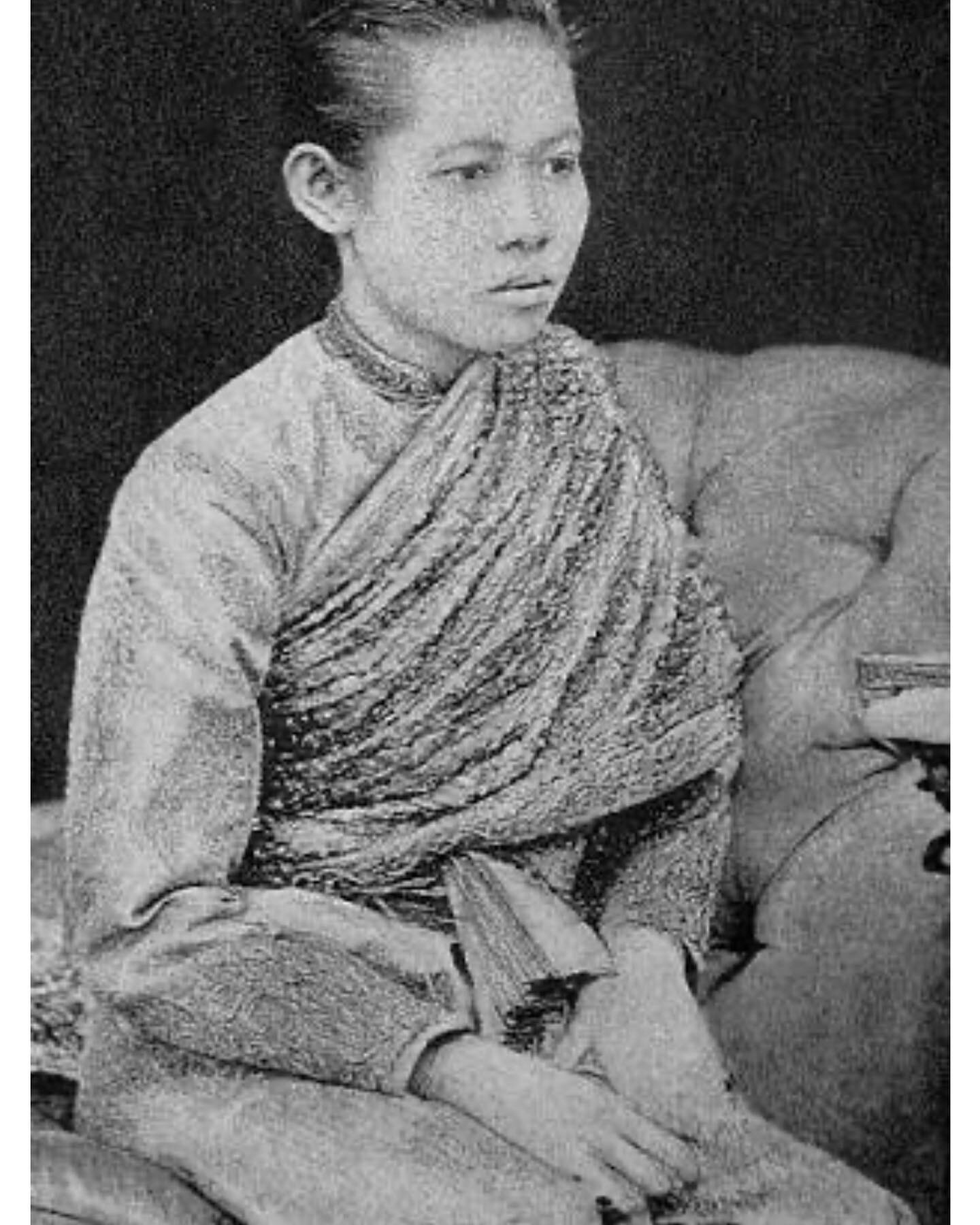
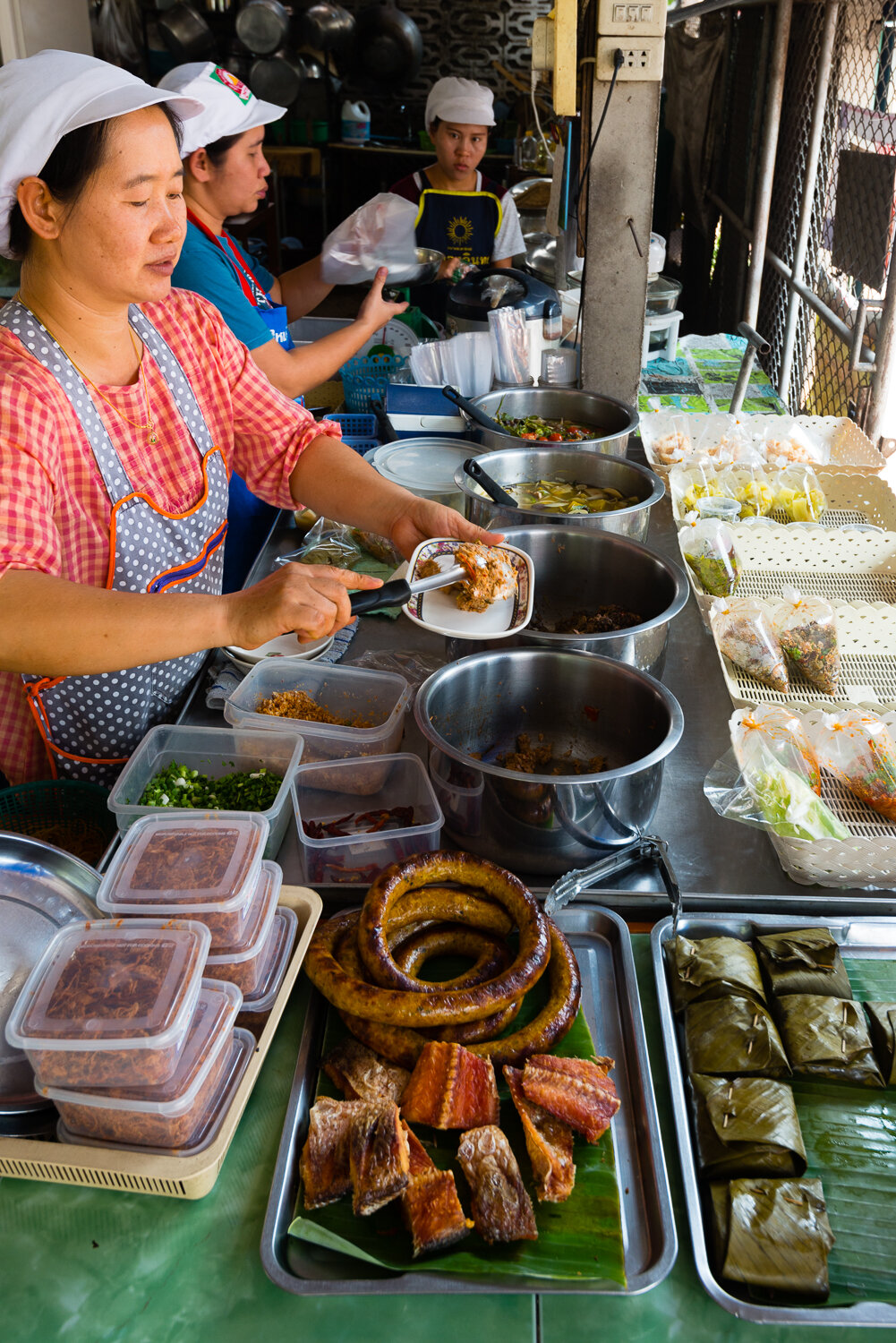
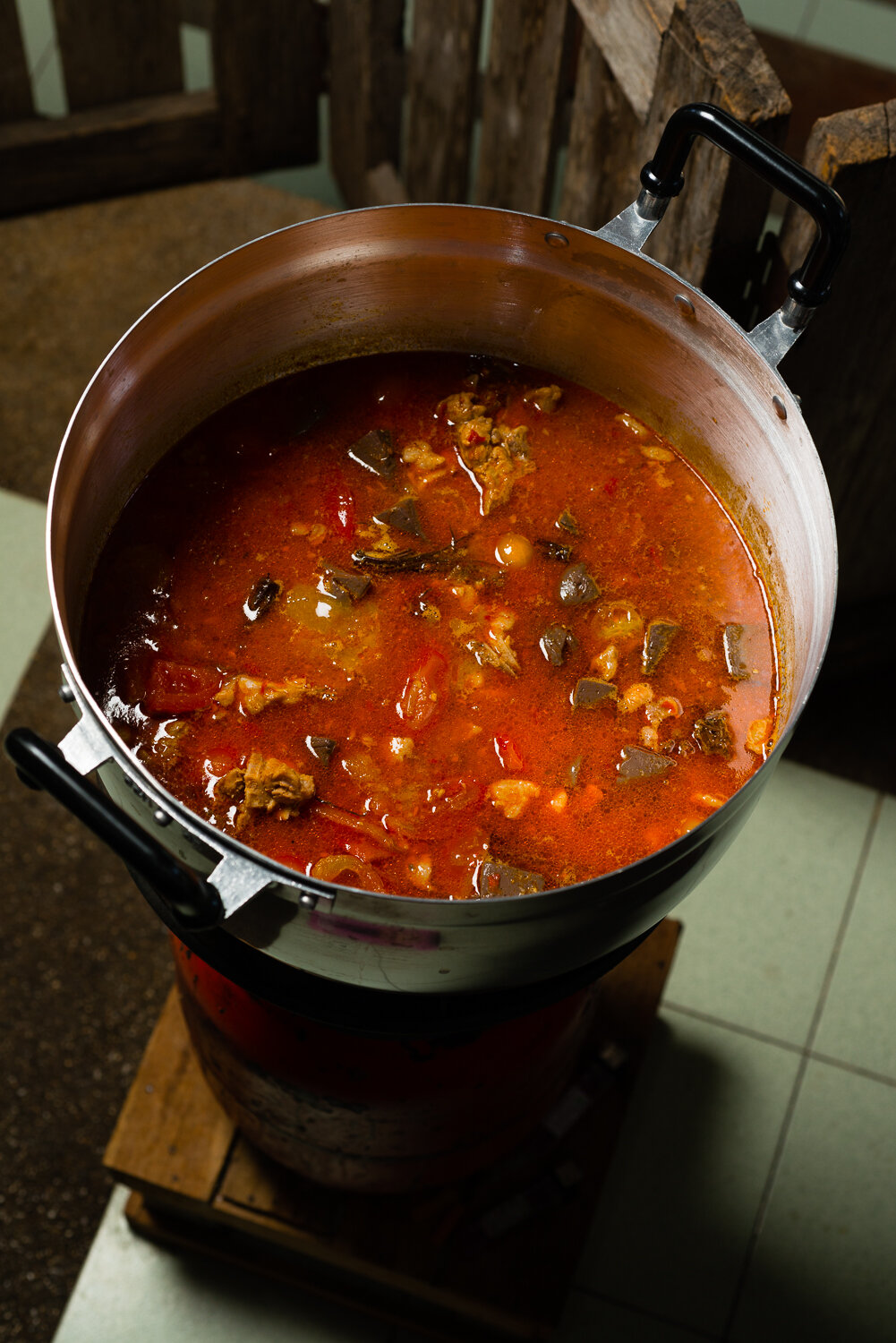
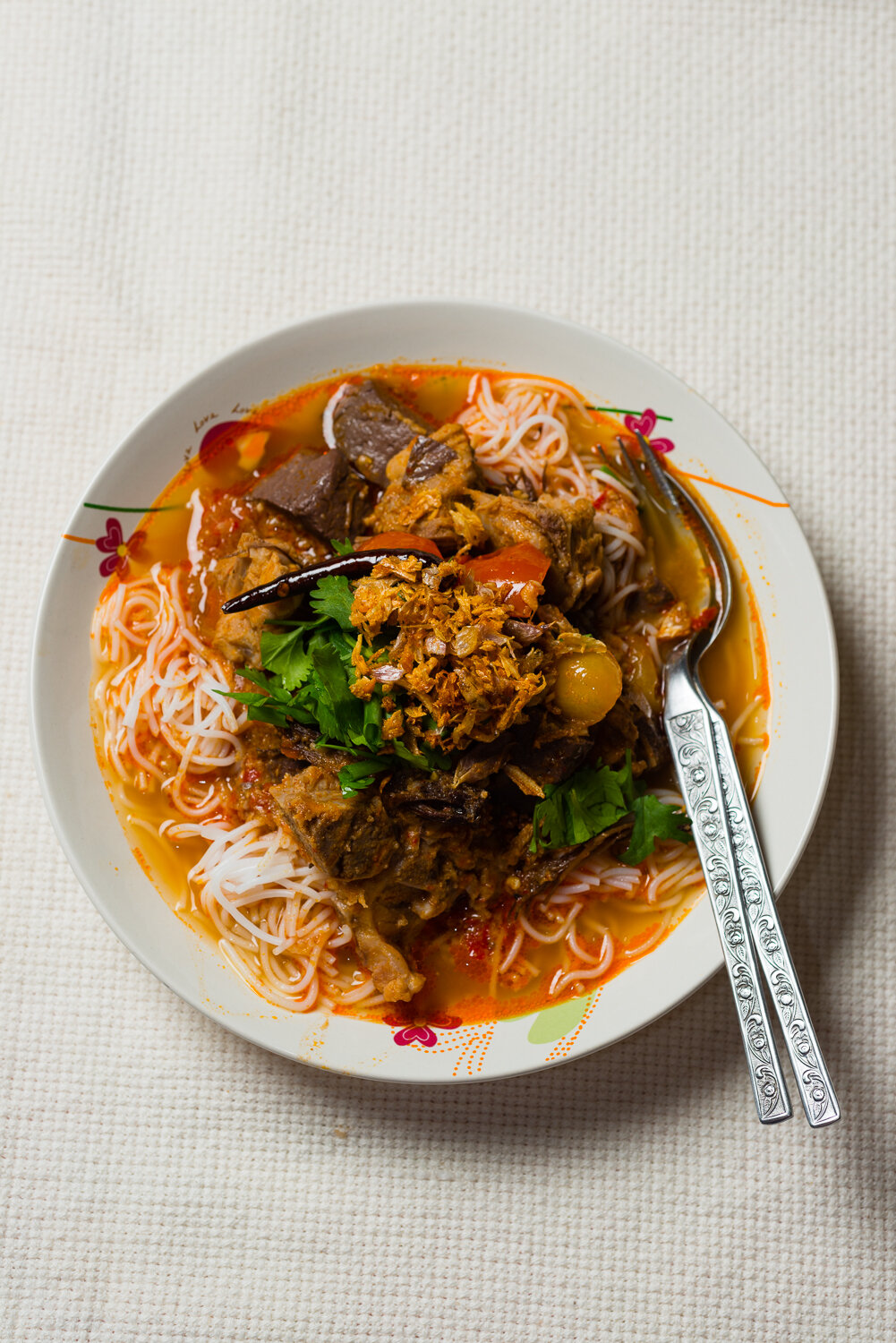
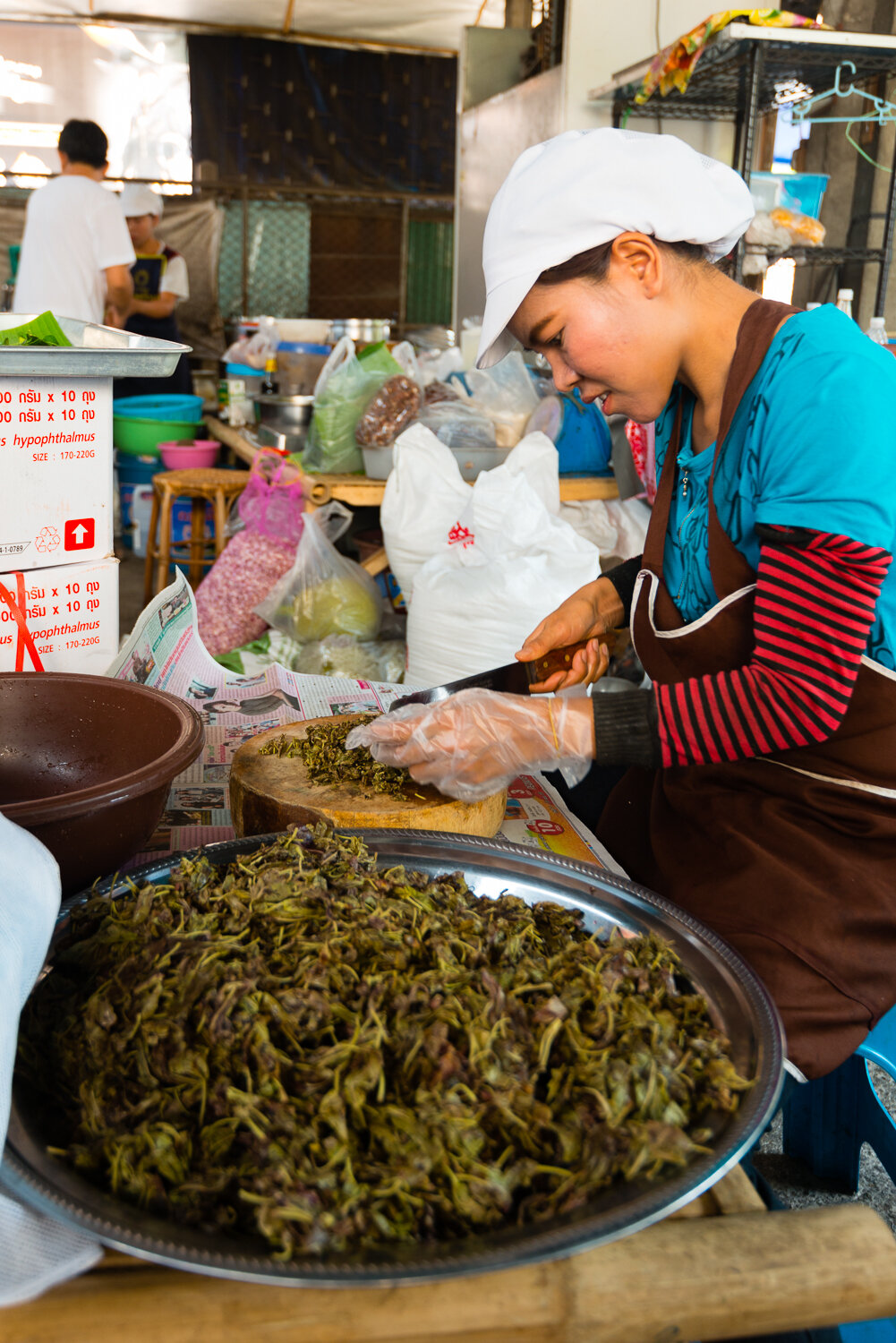
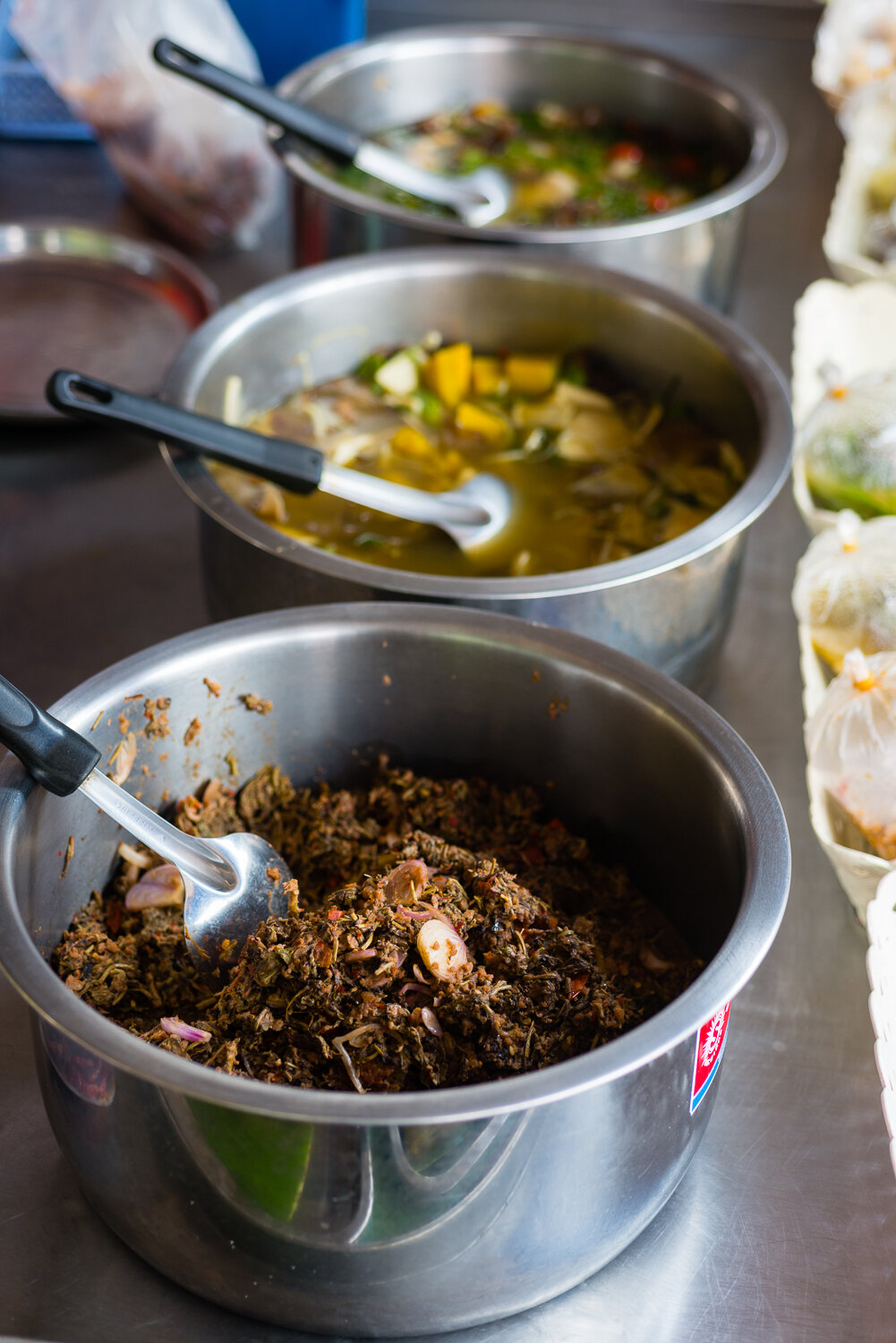
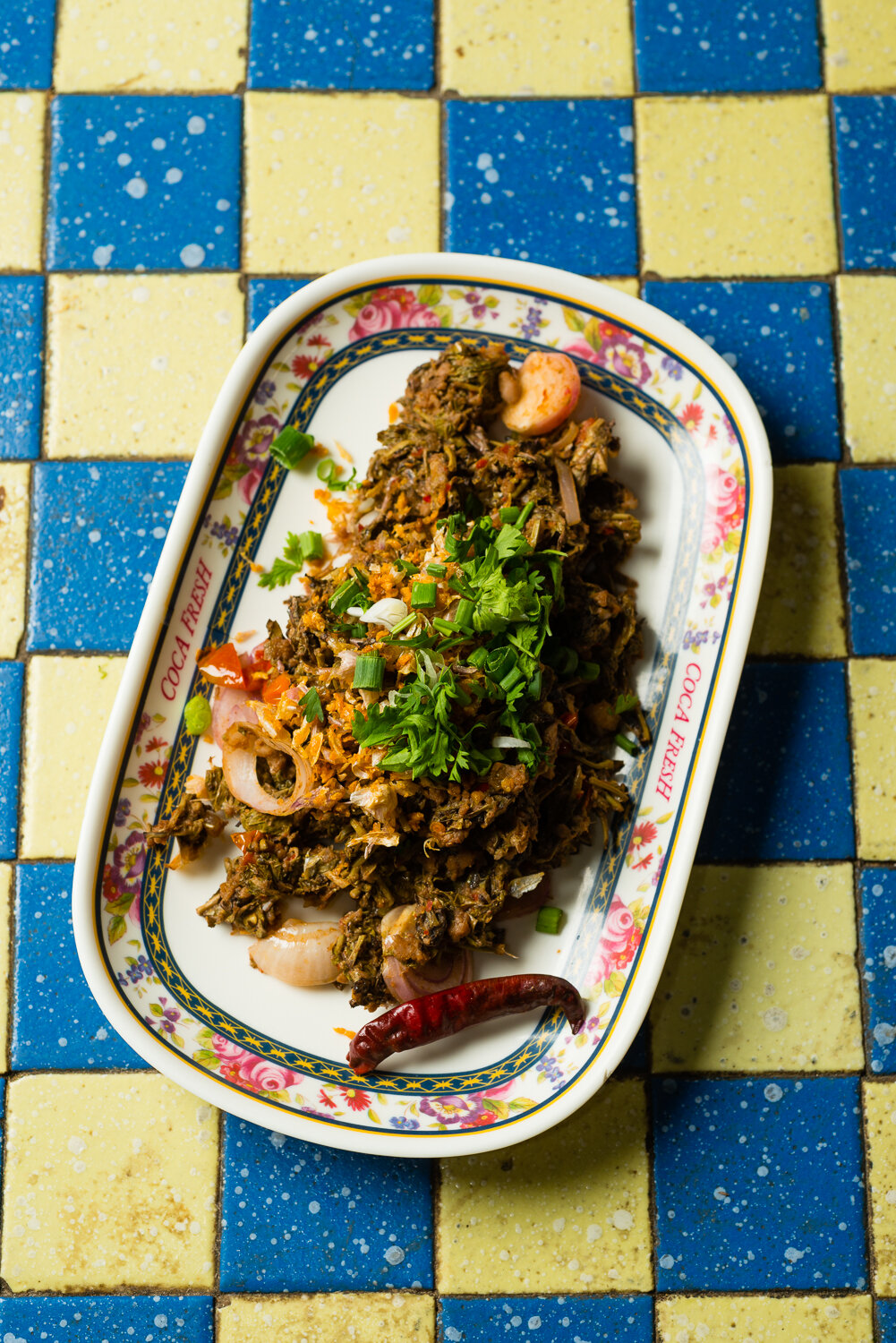
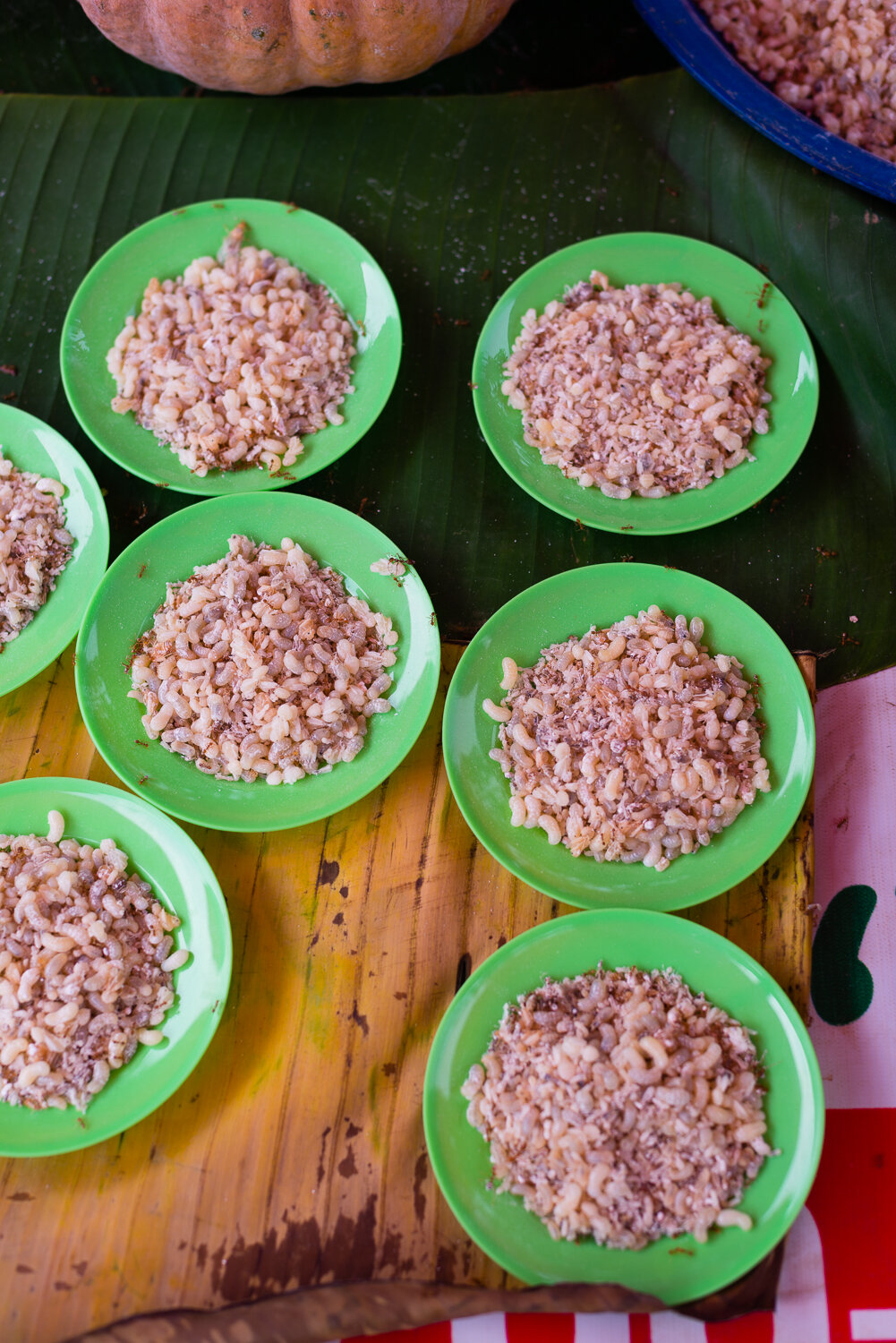
Don’t know your sai ua from your khaep muu? Right this wrong by reading my crash course in northern Thai-style dining from the April issue of Travel + Leisure Southeast Asia – click on the image above for the PDF version  [transliteration typos and Bangkok restaurant recommendation not mine].

A snack in Wan Puen

Posted at 1pm on 5/17/13 | read on
No comment;


_DSC6314

Whenever we visited somebody’s home in Shan State, we were inevitably offered green tea or water and a bite to eat. Often the snack was fruit, such as a few bananas or the watermelon shown above. Sometimes it was something a bit more substantial such as nor khom, a type of bamboo, steamed and eaten with a simple but utterly delicious dip made from ground salt, dried chili and makhwaen (prickly ash).

I really enjoyed these simple meals, which usually also involved conversation in Tai — a language I understand very little of, but love to try to figure out — as well as the chance to peek inside somebody’s home.

Perhaps one of the more interesting opportunities for the latter was in Wan Puen, a Thai Lue village outside of Mong La.

_DSC6293

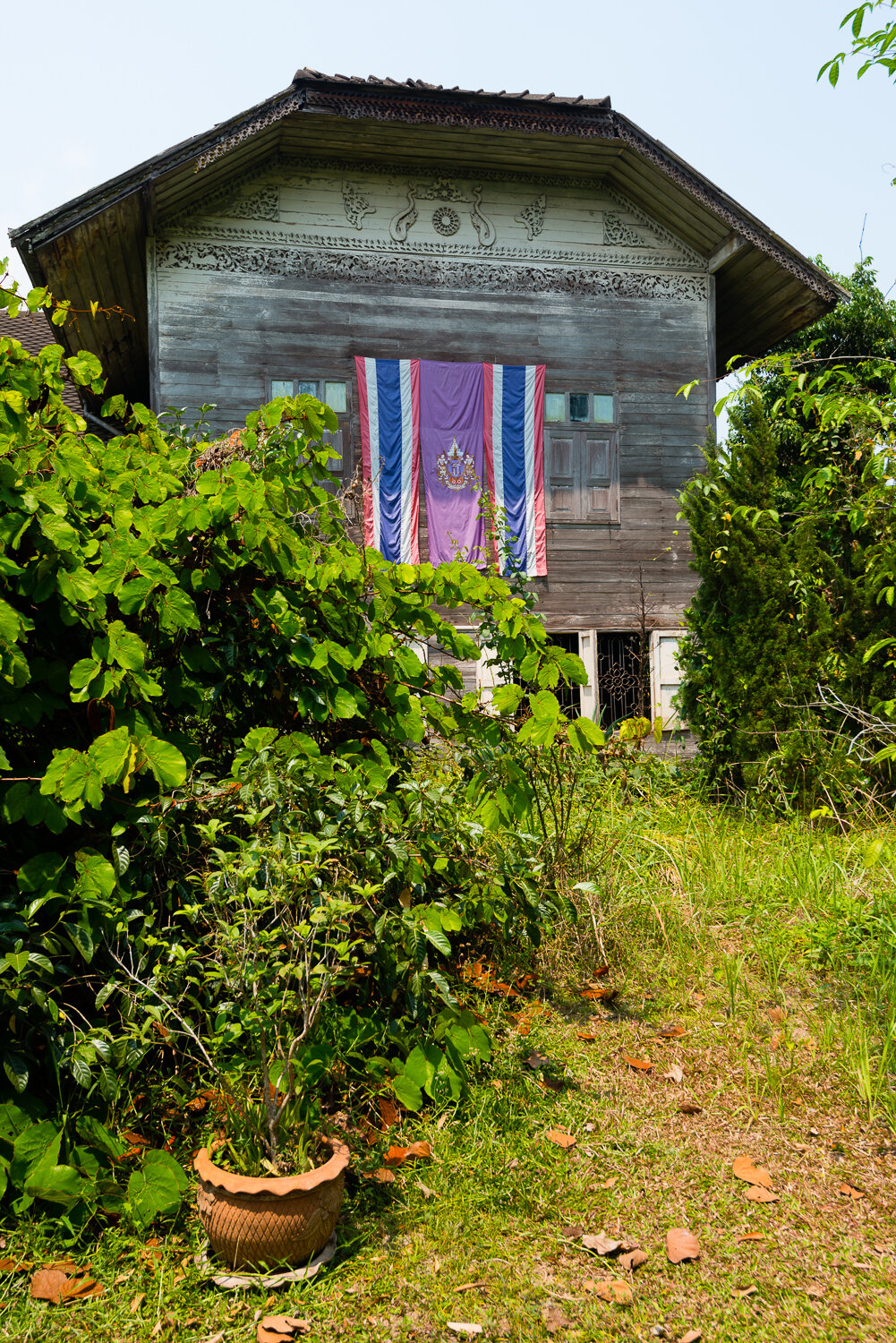
Most of the 69 families in Wan Puen still live in traditional-style wooden houses — a relative rarity, even in this area. The houses can be rather dark inside, so most socialising is done on the elevated bamboo porch, which also functions as the kitchen and laundry area:

_DSC6324

Sitting on this porch, which was about eight feet high, provided me with an entirely different perspective on the village. I was struck by the way the tidy tiled roofs formed something of a rural skyline. That the houses were surrounded by neat fences and faced the same direction also lent the village an almost city-like element of organisation. Shattering this perception was the fact that, directly below every house was a buffalo or cow, and the messiness, sounds and smells that accompany this.

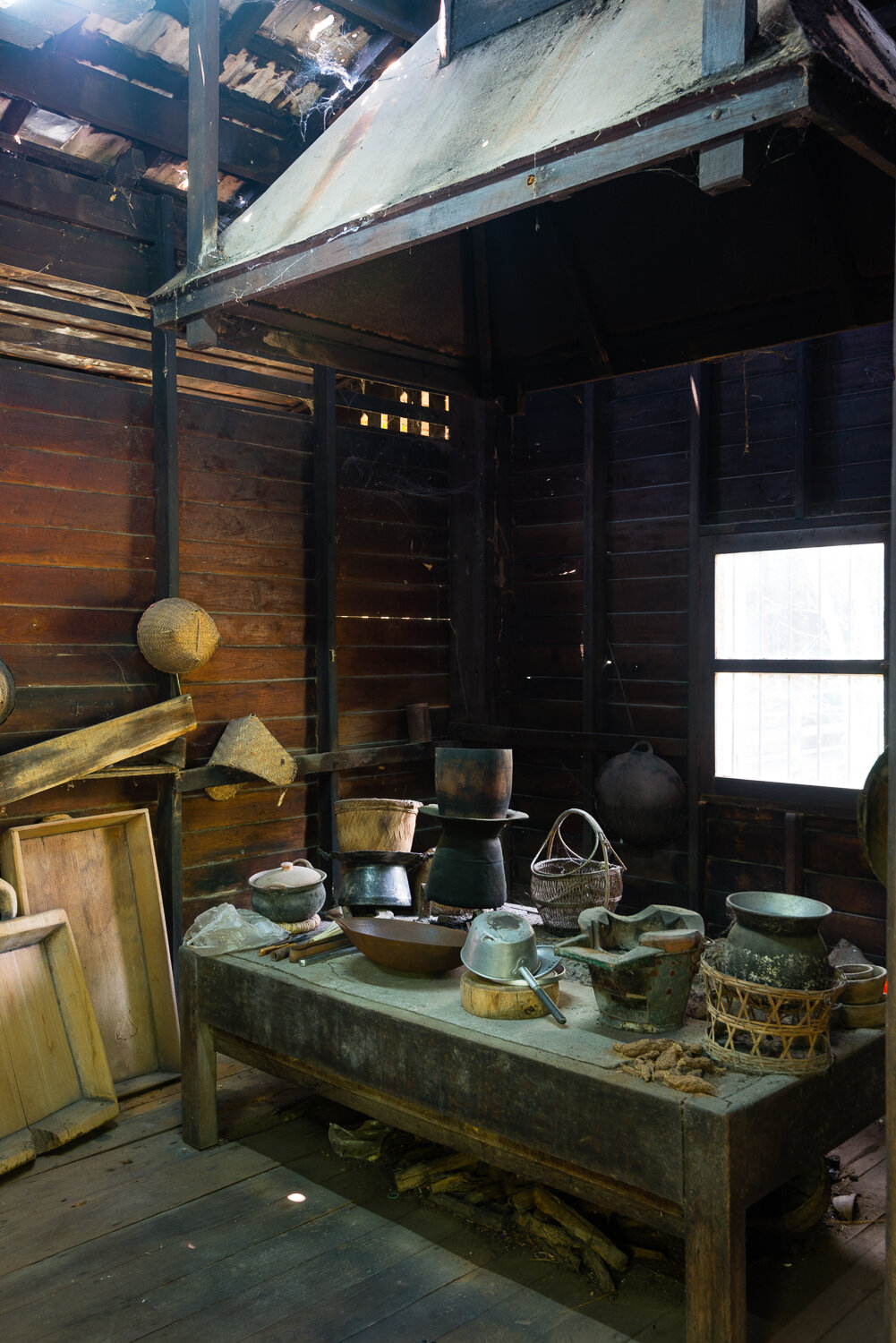
Inside, cooking was done on an open hearth; a soot-blackened rack above the fire held garlic, shallots and dried chilli. At the other end of the room, a girl watched a Thai game show on television.

After a while, when people had gone back back to doing their chores, and when my guide and our hosts were deep in conversation about the price of dried frogs — at least that’s what I caught — I had essentially been forgotten about. This casual hospitality left me free to crunch watermelon, take pictures, listen to Tai, and generally just soak up the scene.

Masters of Rice

Posted at 6am on 5/10/13 | read on
1 Comment


_DSC5367-Edit

The places where predominately ethnic Tai people live — southern China, eastern Myanmar and northern Thailand — are also some of the earliest known areas of rice cultivation. The Tai may not have been the first people to grow and consume rice, but it’s safe to say that they’ve been doing it for a while now. Yet aside from simply boiling or steaming the grains and eating them with other food, they have also come up with a variety of creative ways of preparing rice.

This became clear to me in Kengtung, in Myanmar’s Shan State, a place were many of the dishes continue to be very Tai, and largely untouched by the influences of Chinese, Muslim or western cooking styles, providing a unique insight into an ancient diet.

Perhaps the most obvious examples of this is rice noodles, known in Tai/Shan as khao soi.

_DSC6408-Edit

To make these, a batter is made from rice flour and water, which is steamed then sliced into long strands.

_DSC6414-Edit

I’d assumed that the word khao soi had its origins in the Burmese hkauk hswe, which also means noodles and is pronounced very similarly, but my Shan guide insisted that the term is actually Tai in origin. It would require some linguistic research to verify this, but given that khao soi can be translated as cut (soi) rice (khao), not to mention the Tai people’s long-standing history of rice cultivation in the area, I wouldn’t be surprised if the term could be linked to them.

A fascinating variation on rice strands is khao soi song chan (‘two layers of khao soi’), a seasoned and filled noodle — as far as I can recall, the only seasoned noodle I’ve encountered in Asia. The dish is made by combining a batter of rice flour and several seasonings — soy sauce, MSG, sugar, chili oil, peanuts, garlic oil, chili in vinegar and chili in oil — which are steamed in a thin pan floating in simmering water (shown at the top of this post). When firm, the steamed rice sheet is topped with vegetables and herbs including shredded cabbage, morning glory, lettuce, green beans and green onion, folded in half, and served with a drizzle of garlic oil:

_DSC5403-Edit

You can even throw an egg in, if you want. Either way, it’s spicy savoury, nutty and garlicky, and requires no additional seasoning.

A variation on the dish is khao soi khaep, in which the unseasoned noodles are stuffed with a minced chicken mixture (not unlike bánh cuốn), sliced, then topped with the same vegetables and seasonings as the previous dish:

_DSC5415-Edit

resulting in a something of a noodle-based salad.

Blurring the line between cooked rice grains and noodles is khao pheun, thick hand-cut noodles made from a type of rice cake. In Mae Hong Son, a similar dish — there typically made from chickpea flour — is known as khao raem feun (ข้าวแรมฟืน), ‘rice resting by the fire’, so called because of the final stage of the cooking process.

To make the dish, uncooked rice is soaked in water for a couple hours. After it’s been ground to a paste, a bit of water is added and the mixture is simmered until thick. A coagulant — usually lime — is added, and the mixture is allowed to sit until it’s cooled and has become a solid, somewhat jelly-like mass:

_DSC6397-Edit

To order, chunks are cut off by hand and mixed with a sweet/sour dressing, pickled mustard greens, shredded cabbage, and seasoned with chili and soy sauce:

_DSC7049-Edit

Paa Laeng

Posted at 6am on 5/2/13 | read on
No comment;


_DSC5474-Edit

Unless you’re invited into someone’s home, or buy take-away from the town’s morning market, it’s actually somewhat difficult to find local food in Kengtung. One of the only restaurants serving Shan/Tai dishes is Paa Laeng (in Thai, ป่าแดง, meaning deep forest), named after the nearby temple. The selection of local eats is pretty good, but it’s equally grotty, and is probably only best recommended for adventurous eaters.

If you’re not deterred, in terms of form and flavour, the dishes here have a lot in common with northern Thai food.

There was a dip nearly identical to nam phrik num, the northern Thai dish of long green chillies, garlic and shallots grilled and mashed into a stringy, spicy paste.

This was coupled with neua sa, a dish I later learned to make in Wan Naung Gon. As was the case there, it took the form of minced meat with lots of herbs and makhwaen (prickly ash), resulting in a dish somewhere between northern- and northeastern-style laap.

We ordered a simple broth with tofu, tofu skin and the flowers of the Indian cork tree (called dork peep, ดอกปีบ, in Thai).

And nearly all customers were ordering hoy khom, tiny freshwater snails, which had been boiled with herbs and were served up from plastic buckets. The backdrop of sucking and slurping made Paa Laeng sound like a Japanese ramen bar.

Paa Laeng
Near Wat Paa Laeng, Kengtung, Shan State
10am-7pm


View Thai Eats in a larger map

Mong La’s wildlife market

Posted at 8am on 4/27/13 | read on
No comment;


_DSC6355-Edit

Mong La is an odd place. Perhaps one of the oddest. Located on the Chinese border, the city lies within Myanmar, but is part of the semi-autonomous Wa State, a finger of land controlled by the United Wa State Army, an ethnic militia closely associated with drug production and trafficking. The Wa — former headhunters — have their own government, license plates (attached, almost exclusively, to white, ’90′s era sedans) and road signs. Chinese is the lingua franca in Wa State, and the Chinese Yuan is the accepted currency. Mong La is one of the few cities in all of Myanmar to have electricity 24 hours a day.

Years of open and unrestricted prostitution and gambling made Mong La the epitome of the lawless border town. The vices were a huge draw for Chinese tourists, who came in great numbers to visit casinos, fornicate, take photos at the town’s “zoo”, and catch a stage show at the town’s transsexual cabaret. Drug use among locals was rampant and open, and Mong La became known in the western press as the “Las Vegas of the east”.  Finally, in 2005, the Chinese authorities decided that the party had gone on long enough, and closed its side of the border to all but locals.

Today, Mong La is largely the shell of the place it used to be. The Wa authorities claim to have eradicated drugs in the area, and have erected a bizarre museum to honour this achievement:

_DSC6266-Edit

Many of the town’s casinos are abandoned:

_DSC6263-Edit

The former transgender cabaret is crumbling and covered in weeds, and the town has an overabundance of huge, mouldy hotels.

Yet the one vice that appears to have survived in Mong La is the trade in wildlife.

In one corner of what appears to be an otherwise typical Southeast Asian market is a knot of vendors selling items gathered from the forests. Goods range from paraphernalia associated with wildlife — porcupine quills, bile, bones, organs:

_DSC6338-Edit

including what appeared to be squares of elephant skin:

_DSC6348-Edit

to entire animals, dead and alive, including civets and voles:

_DSC6343-Edit

reptiles and birds:

_DSC6336-Edit

larger animals including deer:

_DSC6342-Edit

and smaller animals:

_DSC6351-Edit

I had been taking photos for several minutes and to my surprise, the only person who objected was the woman preparing the animals above. Although she couldn’t speak Burmese (very few people in Mong La appeared to), it was clear that she was threatening to call the authorities if I continued to take photos, so I left.

In addition to these vendors, there were also shops around the perimeter of the market stocked with what appeared to be ivory and exotic animal pelts; eyewitness reports and photos online suggest that tiger skins and organs are among the wares available.

It’s a disturbing sight, particularly when coupled with the state of the environment surrounding the city, one of hills bald from deforestation or covered by vast rubber plantations. Yet Wa State’s autonomy and increasing demand from China ensure that the trade in wildlife will continue indefinitely.

Mong La’s Morning Market
Mong La, Shan State, Myanmar
6-9am


View Thai Eats in a larger map

Home cooking in Wan Naung Gon

Posted at 2am on 4/23/13 | read on
1 Comment


_DSC6641-Edit

Wan Naung Gon lies a few kilometres outside of Kengtung, in Myanmar’s eastern Shan State. It’s predominately inhabited by the Tai Neua, a group of people related to the Shan and Thai. It’s a quiet, traditional-feeling place that’s also the home village of my guide, Leng.

_DSC6953-Edit

Leng was kind enough to arrange a day of making local dishes with some of his relatives including Sam, a former cook. I know a bit about Shan-style food from the time I’ve spent up in Mae Hong Son, but I’m always curious to learn more about it, as many of the techniques and ingredients seem to echo what the Thai people ate in the distant past, before their food began to be influenced by that of the Muslim world, China and the West.

In particular, I was curious about a dish Leng had mentioned called neua sa. On the surface, the dish seemed pretty similar to northern Thai-style laap or saa, dishes of minced or chopped meat supplemented with herbs and spices:

_DSC6469-Edit

But for this version, Leng added a special ingredient: makok (มะกอก).

The sour fruit and the tart leaves:

_DSC6448-Edit

of this tree are common ingredients in rural Southeast Asia. But for this recipe, Leng used the bark of the tree. Hacking off the hard outer bark from a branch revealed a green inner layer with a fresh, citrusy aroma. This was scraped off:

_DSC6505-Edit

and minced directly with the pork:

_DSC6490-Edit

I was told that using the usual tart suspect, lime, would just be too sour.

Sam took over from here and added dried spices — prickly ash and dried chili — and a mixture of finely chopped herbs — green onion, coriander and rau răm:

_DSC6612-Edit

The mixture was seasoned with salt and MSG and mixed by hand:

_DSC6621-Edit

At this point, the dish was essentially done. A taste revealed it to be assertively herbal, as well as spicy and fragrant; a world away from its northern Thai counterpart, which is generally a meatier dish that emphasises blood, offal and savoury flavours.

Because I thought it best to stick with cooked meat (I was alone in this), Sam took half of the mixture, added sliced pork skin and a couple tablespoons of water, and fried it in a wok:

_DSC6667-Edit

He put the other half on a cabbage leaf, wrapped this with foil (traditionally this is done with banana leaf, he was keen to explain) and grilled it; this he called saa aep — a dish similar in name and ingredients to northern Thai aep, a sort of casing-less sausage.

The next dish Sam made was pla lam, fish cooked in a bamboo tube. He began by chopping a couple small catfish, and combining them with a variety of herbs, a bit of dried spice, and unusually, the tender leaves of chayote:

_DSC6543-Edit

These were seasoned and stuffed into a joint of bamboo:

_DSC6557-Edit

which was sealed and put over a flame for about 25 minutes:

_DSC6581-Edit

The contents were emptied out:

_DSC6759-Edit

and served:

_DSC6767-Edit

Again, the emphasis here was on herbs. The dish was not overly fishy, and the fish had a delicate texture and was surprisingly moist.

Sam’s wife made a simple nam phik makheua som, a dip based around tomatoes. After skewering chilies:

_DSC6516-Edit

and grilling them along with some tomatoes

_DSC6564-Edit

She then mashed a bit of raw chili, shallots and garlic in a moral and pestle:

_DSC6654-Edit

and added the peeled grilled ingredients, seasoning the dish with salt and MSG. The result was a spicy, savoury, smokey dip.

One of my favourite dishes of the meal was nam phik mak heng ta chang, a dip made from pea eggplants. To make this, Sam boiled pea eggplants until tender. While they cooled, he made a base by sauteeing garlic, tomato, turmeric, dried chili, MSG and salt in oil:

_DSC6717-Edit

The eggplants, which had been roughly pounded in a mortar and pestle, were added to the base along with a bit of water. The mixture was simmered a bit longer until it had reduced and amalgamated:

_DSC6725-Edit

Perhaps due to the slightly bitter nature of the eggplants, Sam insisted we eat this dish with nor khom, a type of slightly bitter bamboo that was in season at the time.

The last dish Sam made was a Shan-style stir-fry of phak kut, fern fronds. A similar base of sauteed shallot, tomato, garlic, chili and dried turmeric was supplemented with thin slices of pork belly.

_DSC6748-Edit

This was seasoned, yet again, with salt and MSG, the and the ferns were added and cooked briefly:

_DSC6780-Edit

This result was pleasantly oily, crunchy and savoury.

After all this work, we had ourselves a beautiful Shan-style feast:

_DSC6793-Edit

which ended — lest you get the impression that this was some sort of stuffy ceremony to cookery — like this:

_DSC6941-Edit

If you’re visiting Kengtung and want to learn more about the local food, Leng is an excellent guide, and can be contacted at +95 94903 1470 or sairoctor.htunleng@gmail.com.

Killing a pig in Wan Loi

Posted at 11am on 4/18/13 | read on
3 Comments


_DSC5599-Edit

I heard the sibilant shrieks of a pig from the opposite hillside and knew that they could only mean one thing: a festival was under way.

You see, the height of Southeast Asia’s dry season is a particularly auspicious time for Tai people. In Myanmar’s Shan State, it’s a time for Buddhist ordinations and weddings, all of which involve feasts, and thus, animal slaughter.

The doomed pig was heard in Wan Loi, a rather traditional Tai Khoen village just outside Kengtung (also known as Kyaing Tong and Chiang Tung), in eastern Shan State:

_DSC6028-Edit

The Thai Khoen (also known as Thai Khün) are a Tai ethnic group who speak a dialect closely related to Shan, and more distantly, Thai (in Thai, the village would be known as Baan Doi — บ้านดอย — “Mountain Village”). They have their own unique script and are closely associated with the culture and history of Kengtung.

The villagers told us that preparations were being made for the wedding of a 19 year-old boy. A pig was going to be killed, and no, they had no problem with us watching the slaughter. And although what happened next was admittedly graphic, not to mention a first for me, it was also a fascinating insight into a culture (and cuisine) that appears to have changed surprisingly little.

We followed the villagers to a nearby field, where the pig spent its last few moments posing rather defiantly:

_DSC5625-Edit

After wrestling the immense animal to the ground (not an easy task), the villagers tied the pig’s legs together and its mouth shut. Holding the pig down and covering its eyes, a knife was swiftly thrust into its neck, severing its jugular vein:

_DSC5693-Edit

From this wound spurted a frankly astonishing amount of blood, most of which was directed into a bucket pre-seasoned with herbs and spices. I reckon it took the pig a good five minutes — and some considerable squealing and struggling — to die. It was undeniably brutal, but the villagers weren’t malicious (nor squeamish) about it, and in fact, the slaughter felt rather anticlimactic.

This was the easy part — for the villagers, at least. Breaking down the pig would take another four or five hours, and was a job that involved what seemed like all the village’s young men.

_DSC5729-Edit

First, the hair needed to be removed, which was done directly in the field, using hot water, knives and shaving razors:

_DSC5770-Edit

When the pig was hair-free, it was rinsed in an adjacent stream:

_DSC5828-Edit

By this point, some of the blood had begun to coagulate, and the villagers ate it, uncooked:

_DSC5838-Edit

a dish they called boe wan.

Next, the pig was split lengthwise and its innards yanked out:

_DSC5904-Edit

The intestines and other offal were rinsed in the stream:

_DSC5929-Edit

Some were chucked directly into hot coals, a cooking process they called jee:

_DSC5996-Edit

Other bits were cooked over a flame, a process called phao. Some of the blood was boiled, and all of these were eaten with a delicious dip made from dried chili, MSG, salt and makhwaen (prickly ash):

_DSC6014-Edit

I was fed blood, snout, stomach, intestines, what I suspect was spleen and what I was told was penis. A few of the guys were eating bits of grilled meat seasoned with raw, bitter bile from the stomach of the pig, something I wasn’t previously aware that Tai people (or anybody else, for that matter) ate. I was told that those who took part in the slaughter get dibs on the best bits (these appeared to be snout and tail) — a reward for their hard work. The flame-grilled spleen and the boiled blood were excellent; tender and smoky, not to mention spicy from the dip. The penis had little flavour, but compensated by being the inspiration for several dick jokes (a universal cultural trait, I suspect).

The carcass was divided up:

_DSC5949-Edit

and brought back to one of the houses:

_DSC6011-Edit

Home-made rice alcohol had been brought out at this point, and several of the guys stayed on, eating and drinking as it became increasingly dark:

_DSC6048-Edit

Despite the brutality and messiness of what had happened, and perhaps aided by the rice alcohol and seduced by the setting, I have to admit that I found the whole event quite stirring. In its own unique way, it really was a beautiful, touching occasion, and I was struck the by notion of what I’d just witnessed having probably happened in this very place, in this exact way, for hundreds, or quite possibly even a thousand years. There was an inherent ease and intuitiveness in how the men went about their task, and it felt like the most Tai thing I’d ever witnessed, although we were technically in Myanmar.

Back at the house, those who hadn’t helped with the slaughter were busy cutting the meat into even smaller bits:

_DSC6148-Edit

The pig produced an astonishing amount of meat, much of which was cooked in advance — fried or boiled — for the next day’s wedding feast.

We stayed until about 10pm — late by Shan State standards — chatting, eating and drinking. I bought the guys a case of Leo and some cigarettes, and one of the villagers made us a special version of laap, the northern Thai meat dish, in which the pig’s brain was minced along with the usual pork. The fatty brain and the assertive spice mixture came together in an intersection of spicy and rich that was profoundly delicious. But I suspect that time, place, culture and history were the ingredients that made this meal quite possibly one of the most delicious and memorable I’ve encountered in Southeast Asia.

Please vote!

Posted at 8am on 4/17/13 | read on
4 Comments


103-BFBA_2013_FINALISTBADGE

In addition to being a previous and future outlet for my photos and text, Saveur is hands-down my favourite food magazine. So it was with some pleasure that I learned that this blog has been chosen as a finalist for the magazine’s annual Best Food Blog Awards. I’m a finalist in the Best Culinary Travel Blog category, the registration process is simple and ends on April 19, so go here and vote now!

No comment;


DSC_3245-Edit

I was sceptical, but in my opinion, justifiably so; khao soi, the northern-style dish of wheat noodles in a curry broth, should not be served with shrimp or fish:

DSC_4191-Edit

I was also sceptical about the khao soi I ultimately ordered –  the more traditional chicken version — as it arrived with chunks of boneless chicken meat rather than the standard drumstick.

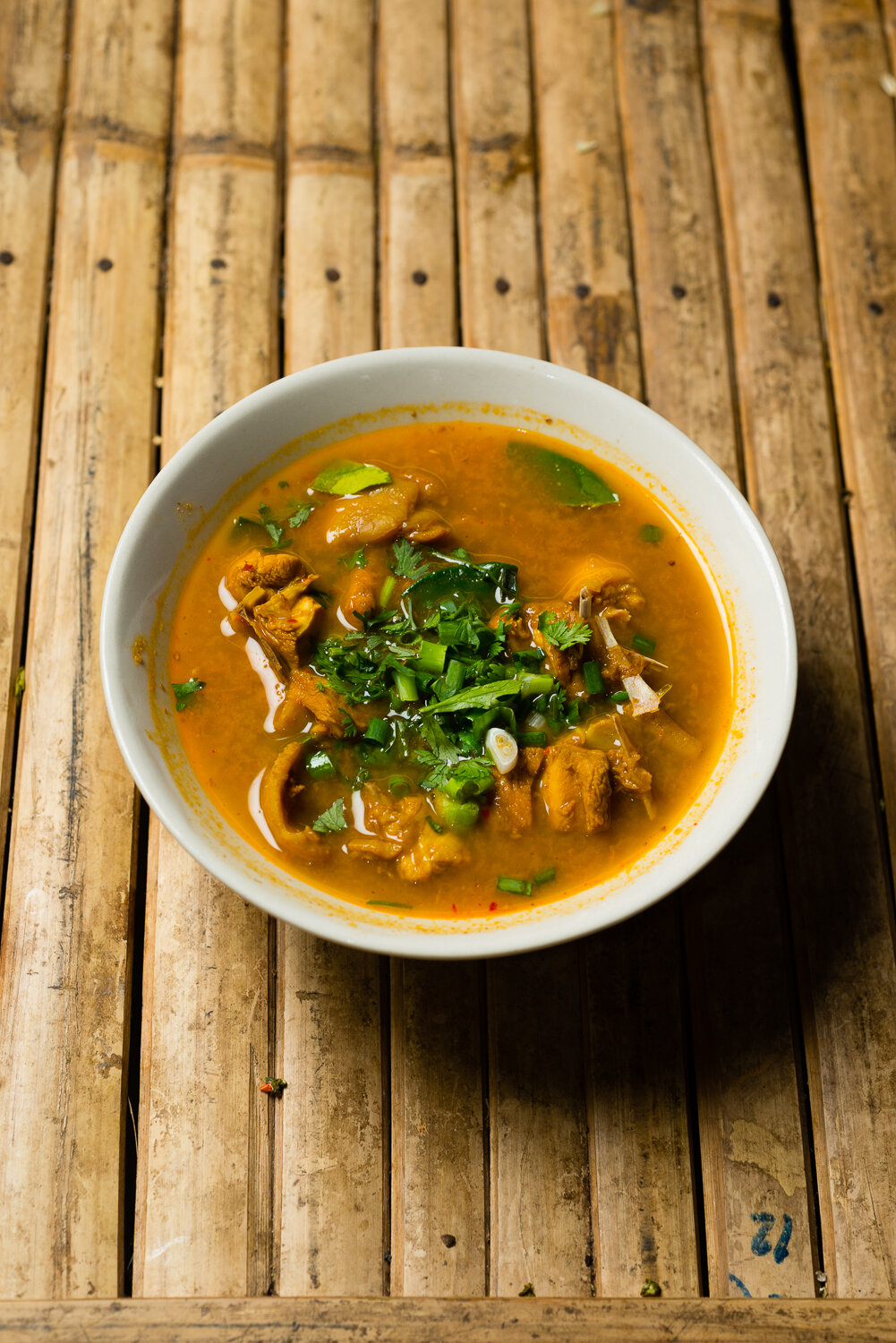
But all this before I actually tasted it. The khao soi at Khao Soi Phor Jai, in Chiang Rai, may inspire scepticism in those familiar with the more traditional versions of the dish, but it turned out to be rather delicious: mild, pleasantly rich and oily, and surprisingly meaty.
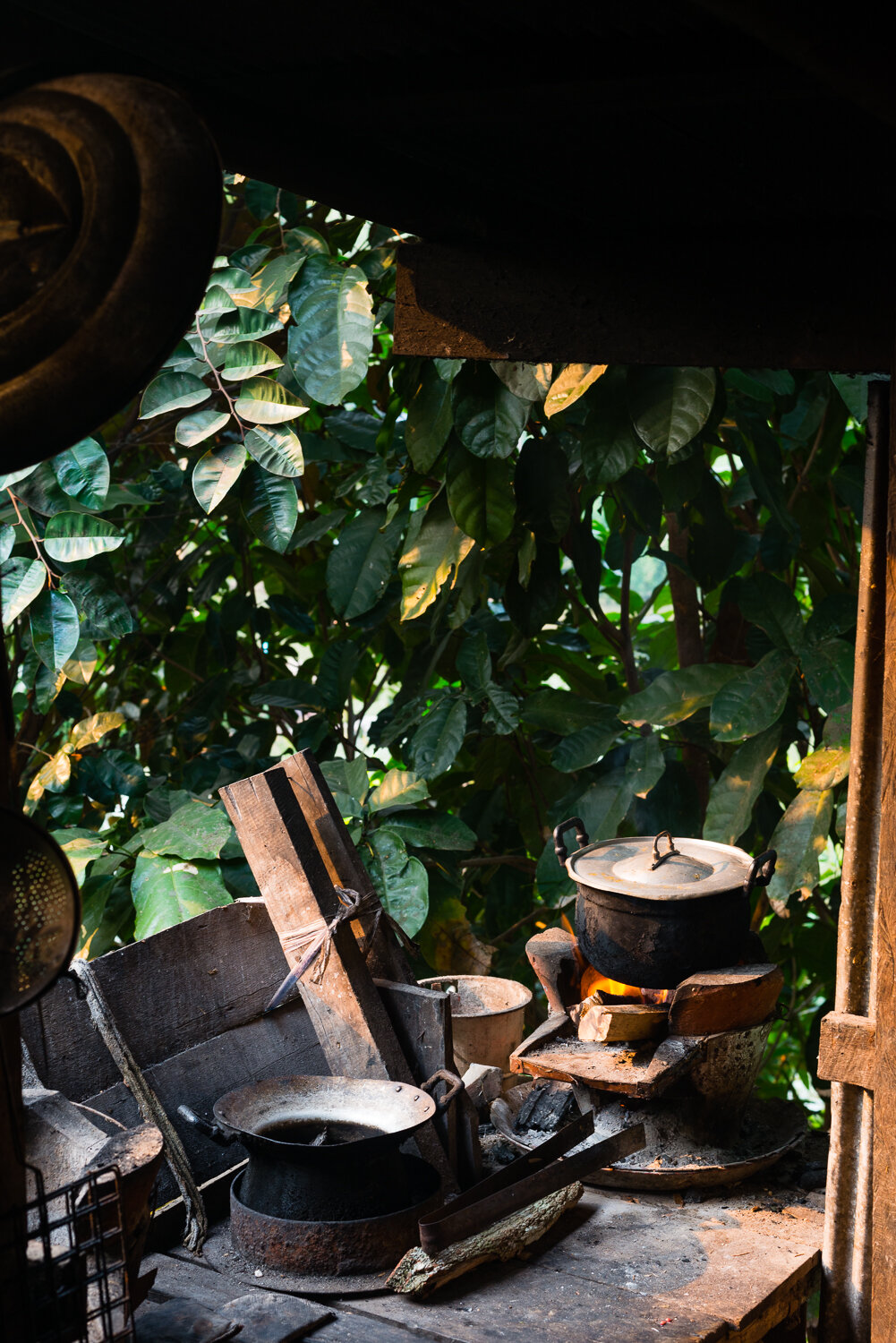
It’s also practical. The curry broth here is essentially a combination of three things: a thin, watery broth; meat in a thick, oily curry paste; and coconut cream. These three ingredients are kept separately and are only combined to order. When asked why it was done this way, the vendor explained thusly: “Other vendors combine the curry and coconut milk in advance. If they don’t sell it all, they have to throw it away. This way I can use the curry paste later if I don’t sell it all.”

I didn’t ask her why she chose to sell khao soi with shrimp, but suspect the answer would be equally practical.

If you can’t get past the oddities of the khao soi here, they also do a short menu of northern Thai standards, including sai ua (ไส้อ่ัว):

DSC_4201-Edit

the herb-and-pork sausage, served here, Bangkok-style, with thin slices of ginger and sprigs of coriander.

naem (แหนม), tart fermented pork, here wrapped in a banana leaf and grilled over coals:

DSC_4193-Edit

and nam phrik num (น้ำพริกหนุ่ม):

DSC_4197-Edit

Fresh, green chilies that, along with garlic and shallots, have been grilled then pounded to a spicy, stringy paste.

Khao Soi Phor Jai
Th Jetyod, Chiang Rai
7.30am-5pm


View Thai Eats in a larger map

Making tofu

Posted at 1am on 4/9/13 | read on
2 Comments


DSC_3744-Edit

Perhaps because of their relative isolation, the residents of northern Thailand’s various Chinese communities have been able to lead distinctly Chinese lives for several decades now. This remoteness has also meant that they’ve had to become rather self-sufficient. Even today, the Chinese residents of towns such as Ban Rak Thai and Mae Salong continue to produce their own air-dried ham, sausages, pickled vegetables, noodles, tea and tofu — the same staples their parents and grandparents would have made back in Yunnan.
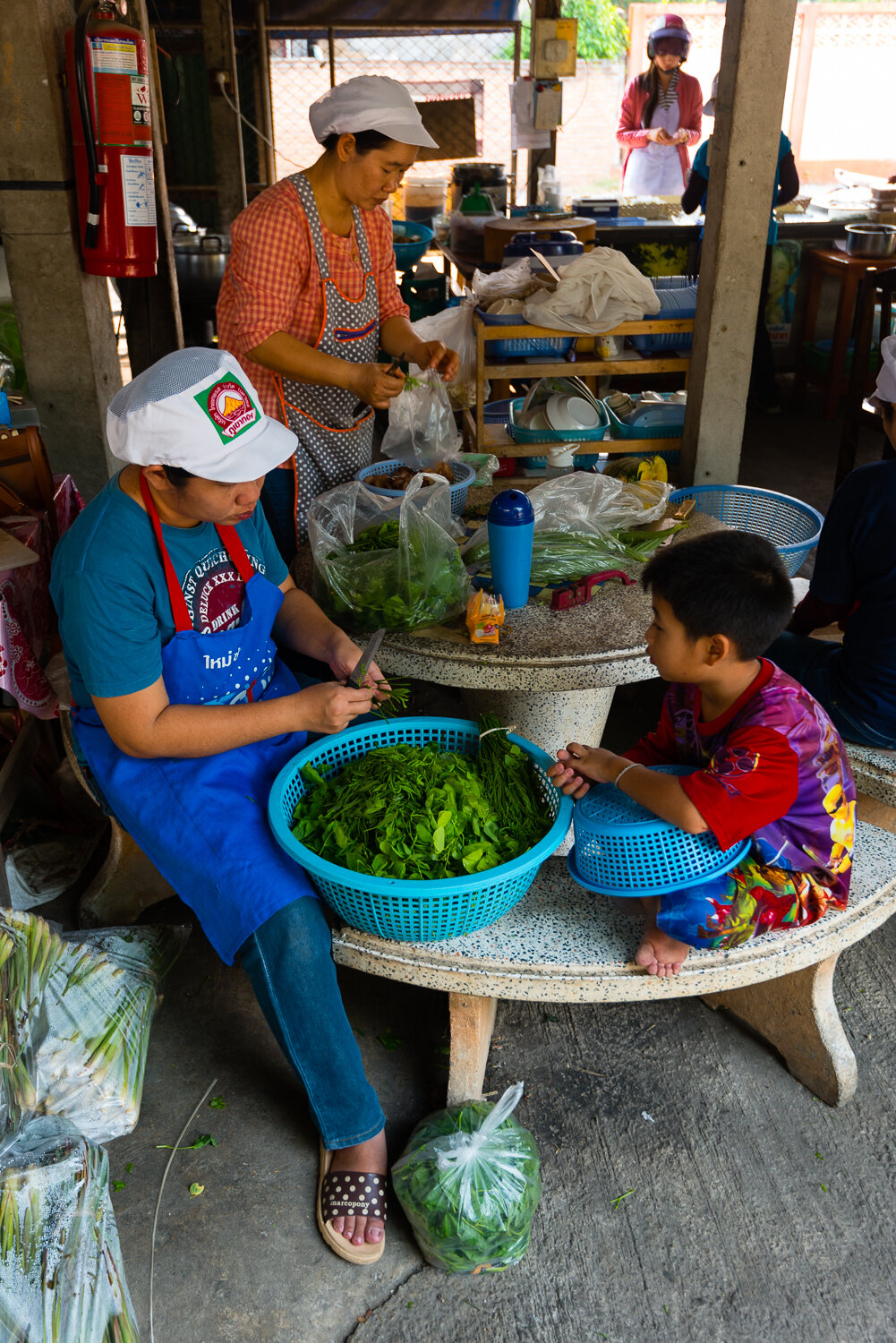
Ban Thoet Thai, in Chiang Rai, although not exclusively Chinese, is yet another example of this.

DSC_3688-Edit

Walking past the house above, I noticed blocks of tofu being dried in the sun:

DSC_3835-Edit

Investigating inside, I discovered a virtual tofu factory:

DSC_3569-Edit

Although they spoke very little Thai, the folks were kind enough to humour my camera and my questions, and I got to witness the entire process of making tofu, from beginning to end — something I hadn’t seen previously.

It began by grinding re-hydrated soy beans, adding water to facilitate the process:

DSC_3510-Edit

The thick mush was combined with a bit of hot water, and the mixture was strained through a suspended cheesecloth via some pretty vigorous spinning and shaking (the leftover solids were used for pig feed):

DSC_3639-Edit

The liquid was poured into large, wok-like vats and simmered for about an hour:

DSC_3562-Edit

After the liquid had thickened slightly and a skin had formed, it was taken from the vats:

DSC_3737-Edit

and immediately combined with a coagulant. After about 15 minutes, curds started to form:

DSC_3494-Edit

The chunky mixture was then poured into permeable plastic sacks that were rolled to combine the solids and extract water:

DSC_3542-Edit

After manually removing as much water as possible, the bags were formed into rectangles and pressed with heavy wood blocks and the additional force of a car jack:

DSC_3605-Edit

After about an hour, the bags were removed from the press and set aside:

DSC_3484-Edit

And after another couple hours of additional draining, the finished tofu was removed from the bags and cut into cubes:

DSC_3833-Edit

In China, the tofu would probably be finished at this point, but to provide it with a bit more shelf life in Thailand’s hot and humid climate, the cubes were dried in the sun for a day before being sold.